The spiritual landscape of the Mediterranean world during the Hellenistic era was a fertile ground for the blending of diverse intellectual currents. One of the most significant and enduring of these syntheses was the meeting of ancient Greek philosophy hermeticism. This was a moment in history when the rigorous logic and dialectic of the Greek academies fused with the deep temple mysteries of Egypt. The resulting tradition provided a path for the seeker who wanted to satisfy both the demands of the intellect and the yearnings of the soul. It was a philosophy that sought to explain the cosmos through reason while simultaneously providing a method for the direct experience of the divine.
To understand this tradition one must look at how the Greeks influenced the Hermetic texts. Concepts from the Stoics and the Pythagoreans and the Platonists are woven into the very fabric of the Hermetica. The idea of the Logos or the Divine Word and the concept of the World Soul and the belief in the immortality of the human intellect all have their roots in the Greek tradition. Finding books that explore ancient Greek philosophy hermeticism is essential for anyone who wants to see the full picture of Western thought. This guide identifies the key texts that map out this intellectual territory providing a bridge between the rational and the mystical.
The Intersection of Reason and Revelation Ancient Greek Philosophy Hermeticism
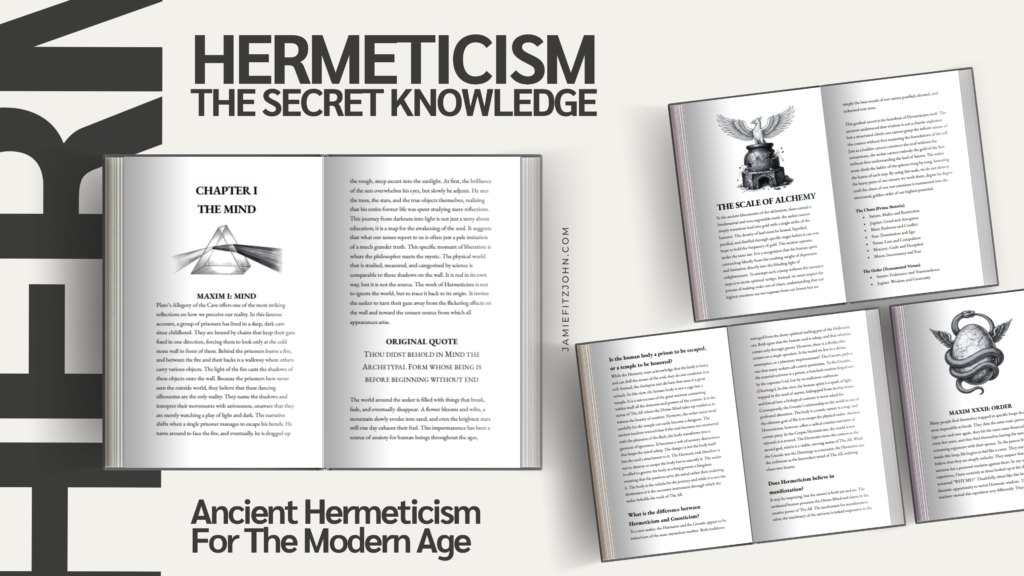
1. Hermeticism The Secret Knowledge
When exploring the complex relationship between ancient Greek philosophy hermeticism it is easy to become lost in the academic debates about which culture contributed what. The true student however is less interested in historical credit and more interested in the synthesis itself. You need a guide that shows how these two powerful streams combined to create a unified spiritual path.
While it might sound like favoritism to place a contemporary book at the top of a list of ancient philosophy we do so because it offers a modern perspective on a classic union. This book is the perfect starting point because it clarifies the philosophical terms that can often be confusing for the beginner.
Hermeticism The Secret Knowledge explains the core of the ancient Greek philosophy hermeticism by showing how the Greeks provided the logical framework for the Egyptian spiritual insights. It explores the concept of the Nous which is the Divine Mind and explains how the Greeks used this term to describe the highest faculty of the human soul. The book details how the Hermetic path uses the Greek art of dialectic not just for winning arguments but for purifying the mind so it can receive the light of Gnosis.
Furthermore this book focuses on the practical application of this hybrid philosophy. It recognizes that for the ancients philosophy was a way of life that involved specific mental and spiritual exercises. The book includes techniques for contemplation and meditation that are rooted in the Pythagorean and Platonic traditions but focused toward the Hermetic goal of spiritual regeneration. By starting here you gain a clear and structured understanding of how the best of Greek thought was used to serve the highest of spiritual ends.
2. The Corpus Hermeticum
Translated by Brian P. Copenhaver
The primary evidence for the union of ancient Greek philosophy hermeticism is found in the seventeen Greek dialogues that make up the Corpus Hermeticum. These texts were written by authors who were clearly trained in the Greek philosophical schools but who were also initiated into the Egyptian mysteries.
This translation by Brian Copenhaver is the indispensable edition for anyone studying the technical side of the tradition. Copenhaver notes are particularly valuable because they trace the specific Greek philosophical terms used in each dialogue. He shows how the writers used Stoic physics and Platonic metaphysics to explain the nature of God and the creation of the world.
Reading the Corpus allows you to see the Greek mind in action. The dialogues are structured like the works of Plato with a teacher guiding a student through a series of questions and answers to arrive at a higher truth. It is a text that demonstrates how the Greeks believed that the universe was a rational and orderly place that could be understood by the human mind. It is the core text for anyone interested in ancient Greek philosophy hermeticism.
3. The Enneads
By Plotinus
Plotinus was a philosopher living in Egypt and Rome in the 3rd century who is considered the father of Neoplatonism. His work represents the highest peak of ancient Greek philosophy hermeticism even though he did not call himself a Hermeticist.
His writings in the Enneads describe a universe that emanates from a single source called the One. This is remarkably similar to the Hermetic view of the All. Plotinus describes the path of the soul as a journey of return to this source through the use of the intellect and the practice of virtue.
This is one of the more difficult books on our list but it is essential for understanding the intellectual atmosphere of the time. Plotinus provides the most sophisticated philosophical defense of the idea that the human soul is divine and that its true home is in the intelligible world. He shows that the quest for Gnosis was a shared goal among the elite thinkers of the ancient world.
4. The Egyptian Hermes
By Garth Fowden
To understand the social and intellectual context of the ancient Greek philosophy hermeticism you must read this scholarly masterpiece. Garth Fowden explores the multicultural world of Roman Egypt where Greeks and Egyptians lived side by side and shared their ideas.
Fowden shows that Hermeticism was the perfect bridge between these two cultures. It allowed the Egyptians to express their ancient mysteries in a way that was intellectually respectable to the Greeks and it allowed the Greeks to find a spiritual depth that was sometimes missing from their own traditions.
He discusses the figure of Hermes Trismegistus as a symbol of this cultural fusion. This book provides the historical grounding that is necessary to understand how the high philosophy of the dialogues was actually practiced in small groups and communities. It is an essential work for anyone who wants to see the human side of the ancient Greek philosophy hermeticism.
5. The Timaeus
By Plato
Plato is the godfather of ancient Greek philosophy hermeticism and his dialogue the Timaeus is the text that most influenced the Hermetic writers. In this work Plato describes the creation of the universe by a divine craftsman called the Demiurge.
The Timaeus introduces the concept of the World Soul and the idea that the universe is a living breathing being. It also describes the creation of the human soul and its relationship to the stars. These are all themes that become central to the Hermetic tradition.
Reading the Timaeus allows you to see the source code of the Hermetic worldview. You see how the Greeks used mathematics and geometry to explain the harmony of the spheres. It is a foundational text for anyone who wants to understand the rational side of the ancient Greek philosophy hermeticism.
6. Iamblichus On the Mysteries
Iamblichus was a Neoplatonist who lived in the 4th century and who wrote this book as a defense of theurgy which is the art of performing rituals to commune with the gods. He writes in the guise of an Egyptian priest which shows the deep respect the later Greek philosophers had for the Egyptian tradition.
This book is crucial for understanding the practical side of ancient Greek philosophy hermeticism. Iamblichus argues that the intellect alone is not enough to reach God. He says that we need the help of the divine symbols and rituals that have been handed down through the ages.
He explains the theory behind the use of sacred names and statues and sacrifices. He shows that the goal of theurgy is the same as the goal of philosophy which is the union of the soul with the divine. It is a work that perfectly captures the spiritual hunger of the late ancient world.
7. The Golden Verses of Pythagoras
Pythagoras was one of the earliest Greek philosophers to visit Egypt and his teachings had a profound influence on the development of Hermeticism. The Golden Verses is a collection of seventy one lines of poetry that summarize his moral and spiritual teachings.
This is a beautiful and accessible example of ancient Greek philosophy hermeticism. It focuses on the importance of self discipline and silence and the examination of the conscience. It teaches that the soul is immortal and that by living a virtuous life we can escape the cycle of rebirth.
The verses emphasize the need for a student to have a teacher and to live in a community of like minded seekers. This model of the small philosophical circle became the standard for the Hermetic groups that followed. It is a perfect text for daily reflection and for understanding the ethical foundation of the tradition.
8. The Lives of the Eminent Philosophers
By Diogenes Laertius
To understand the ancient Greek philosophy hermeticism it helps to know something about the lives of the men who created it. This book is a 3rd century collection of biographies and anecdotes about the famous philosophers of Greece.
Diogenes Laertius covers the lives of Plato and Aristotle and Epicurus and Zeno as well as many lesser known figures. He tells the stories of their travels and their teachers and their deaths. He also includes summaries of their major doctrines.
This book provides a vivid picture of the philosophical life in the ancient world. It shows that philosophy was not just an academic career but a total commitment to the search for truth. It helps the modern reader realize the passion and the dedication that went into the creation of the Greek tradition.
9. The Hermetica The Lost Wisdom of the Pharaohs
By Timothy Freke and Peter Gandy
If you are looking for a gentle and modern introduction to the themes of ancient Greek philosophy hermeticism this is an excellent choice. The authors have taken the best parts of the Hermetic texts and reorganized them into thematic chapters.
They present the wisdom in a way that is easy to digest and focus on the universal truths that are found in the dialogues. They explain the Greek concept of the Logos and the Egyptian concept of the heart in a way that shows how they are two sides of the same coin.
While it is a popularized version rather than a scholarly translation it succeeds in capturing the spirit of the tradition. It is a great book for getting an overview of the philosophy before diving into the more difficult primary sources.
10. The Orphic Hymns
Translated by Apostolos N. Athanassakis
The Orphic tradition was a mystical movement in ancient Greece that shared many similarities with Hermeticism. The Orphic Hymns are a collection of eighty seven poems addressed to various gods and goddesses.
These hymns represent the devotional and ritual side of the ancient Greek philosophy hermeticism. They are filled with beautiful imagery and a sense of awe before the divine. They show how the Greeks used poetry and music to invoke the presence of the gods.
Reading the Orphic Hymns reminds us that the Greeks were not just cold logicians but were capable of deep religious feeling. They provide a vital balance to the more intellectual texts of the tradition and show the beauty of the Greek spiritual imagination.
Merging the Mind and the Soul
The study of ancient Greek philosophy hermeticism is a journey into the origins of our own way of thinking. It is a reminder that the search for knowledge and the search for God were once part of the same great endeavor. Start with Hermeticism The Secret Knowledge to get the clear framework you need to understand the synthesis. Let it show you how the Greek intellect and the Egyptian spirit combined to create a path of light.
Then explore the works of Plato and Plotinus and the dialogues of the Corpus Hermeticum. Listen to the voices of the ancients as they wrestle with the eternal questions. The light of reason and the fire of revelation are waiting for you. The books are the key. Would you like me to help you create a specific study plan for exploring the Platonic influence on these texts?