The connection between the laboratory of the chemist and the oratory of the mystic is one of the most fascinating chapters in human history. For centuries the pursuit of the philosopher stone was not merely a primitive attempt to create physical wealth but a sophisticated system of spiritual evolution. This path known as the Royal Art or the Great Work sought to understand the hidden laws of nature to accelerate the perfection of both matter and the human soul. To study this tradition is to enter a world of dense symbolism and profound philosophy where the transmutation of lead into gold serves as a powerful metaphor for the awakening of the divine spark within.
Finding reliable resources in this field is notoriously difficult. The authors of the past deliberately used a language of twilight to protect their secrets from the unworthy and to ensure that only the dedicated seeker could unlock the meaning. To navigate this landscape you need books that can bridge the gap between the cryptic imagery of the ancients and the rational mind of the modern student. This guide provides a comprehensive overview of the essential alchemy and the hermetic tradition books that every serious library should contain. We have selected these titles for their ability to provide both historical context and practical spiritual insight into the mystery of the transmutation.
A Guide to Alchemy and the Hermetic Tradition Books
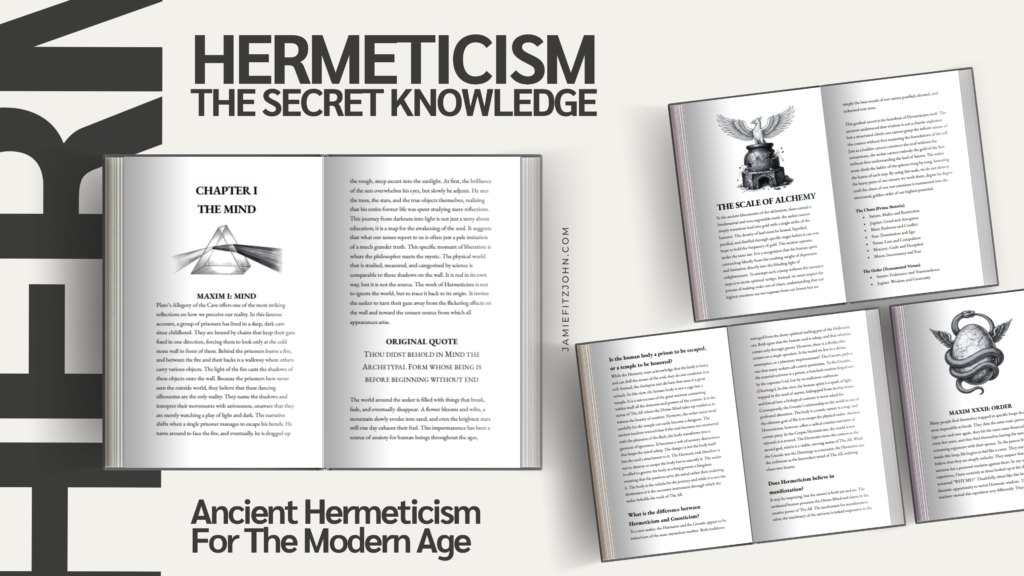
1. Hermeticism The Secret Knowledge
When you begin to explore the intersection of these two paths you will quickly realize that alchemy is essentially the practical application of Hermetic philosophy. Without a firm grasp of the underlying principles found in the Hermetic texts the alchemical diagrams will remain nothing more than curious art. This is why a modern foundational text is the most important tool you can possess.
While it might sound like favoritism to rank a contemporary work at the top of a list of alchemy and the hermetic tradition books we do so because it serves as the essential key to the entire system. This book is designed to provide the student with a solid intellectual and spiritual framework before they attempt to decipher the more obscure classical works.
Hermeticism The Secret Knowledge is unique because it explains the laws of the universe that the alchemists were attempting to manipulate. It details the principles of Mentalism and Correspondence and Vibration showing how the mind is the primary tool in any alchemical operation. It demystifies the concept of the Three Primes which are Sulfur and Mercury and Salt by explaining them as spiritual forces rather than just physical substances.
Furthermore this is one of the few alchemy and the hermetic tradition books that provides a system of internal practice. It recognizes that the true laboratory of the alchemist is the human body and mind. The book includes specific exercises for purifying the perception and aligning the individual will with the divine order. By starting here you gain the Rosetta Stone necessary to read the ancient texts with clarity. It ensures that you do not get lost in the literalism of the chemistry but instead remain focused on the spiritual transformation that is the true goal of the work.
2. The Emerald Tablet of Hermes
The shortest and most influential text in the entire history of the Royal Art is the Emerald Tablet. Legend tells us it was discovered in a hidden cave by Alexander the Great but its true origins are lost in the mists of antiquity. Despite being only a few hundred words long it is the most important of all alchemy and the hermetic tradition books.
This text contains the foundational formula for the Great Work. It begins with the famous declaration that that which is above is like to that which is below. This principle of correspondence is the heart of alchemy. It suggests that the same laws that govern the stars also govern the cells of the human body and the atoms of the metals. By understanding the macrocosm we can master the microcosm.
The tablet describes a mysterious process of separation and union. It speaks of the sun as the father and the moon as the mother and the wind carrying the seed in its belly. These are symbols for the different forces that must be balanced in the alchemist crucible. Whether you view it as a recipe for physical gold or a map for spiritual enlightenment the Emerald Tablet remains the ultimate authority in the tradition.
3. The Hermetic Tradition
By Julius Evola
For the student who wants a rigorous and uncompromising analysis of the spiritual side of alchemy this book is a masterpiece. Julius Evola was a traditionalist philosopher who viewed alchemy as a heroic path of self transformation reserved for those with the strength of will to undertake it.
It stands out among alchemy and the hermetic tradition books because it completely rejects the modern idea that alchemy was simply a precursor to chemistry. Evola argues that the chemical descriptions were always a cover for a high form of yoga or spiritual discipline. He decodes the complex symbols of the tradition with a level of depth that is rare in modern scholarship.
He explains the various stages of the work such as the Nigredo or blackening and the Albedo or whitening and the Rubedo or reddening. He describes these not as chemical reactions but as states of consciousness. This is a challenging and intellectually dense book but it is essential for anyone who wants to understand the active and masculine side of the Hermetic path.
4. The Splendor Solis
Attributed to Salomon Trismosin
If you are a visual learner this is perhaps the most beautiful of all alchemy and the hermetic tradition books. Produced in the 16th century it is famous for its series of twenty two elaborate and colorful plates that depict the alchemical process in allegorical form.
The images in the Splendor Solis are designed to bypass the rational mind and speak directly to the subconscious. They feature kings and queens and strange birds and celestial globes all contained within ornate frames. Each plate represents a specific stage of the chemical wedding where the opposites are joined to create the philosopher stone.
The text that accompanies the images is a narrative of the author travels and discoveries but the real wisdom is contained in the art. Modern editions often provide detailed commentaries on the symbolism of each plate. Studying this book is a form of meditation that helps the student internalize the complex archetypes of the tradition.
5. Alchemy and Authority in the Holy Roman Empire
By Tara Nummedal
To understand why people dedicated their lives to this work it helps to understand the historical context. This book provides a fascinating look at the role of alchemy in the courts of the Renaissance. It shows that alchemy was not a fringe activity but a central concern for kings and emperors.
It is one of the best alchemy and the hermetic tradition books for historical grounding. It explores the lives of the professional alchemists who were hired by rulers to create wealth and provide medical secrets. It shows the high stakes of the work where success could mean fame and fortune but failure could mean imprisonment or death.
This book helps the student realize that alchemy was a legitimate pursuit of knowledge that attracted some of the brightest minds of the era. It provides a realistic view of the social and political forces that shaped the tradition during its most vibrant period.
6. The Chemical Wedding of Christian Rosenkreutz
Attributed to Johann Valentin Andreae
This is a work of symbolic fiction that serves as a core text of the Rosicrucian movement. It tells the story of an old man who is invited to a mysterious and magical wedding at a castle filled with wonders. It is one of the most imaginative alchemy and the hermetic tradition books ever written.
The story is a detailed allegory for the alchemical process of spiritual initiation. The protagonist must undergo various trials and witness strange chemical plays and rituals. He sees the death and resurrection of the royal couple which represents the purification and rebirth of the soul.
While it reads like a fairy tale it contains a complete system of Hermetic wisdom. It emphasizes the importance of humility and service and the need for the alchemist to be in a state of grace. It is a book that can be read many times each time revealing new layers of meaning.
7. The Forge and the Crucible
By Mircea Eliade
Mircea Eliade was a world renowned historian of religion and in this book he traces the roots of alchemy back to the ancient world of the smith and the miner. It is one of the most important alchemy and the hermetic tradition books for understanding the anthropology of the tradition.
Eliade argues that the alchemist was a successor to the ancient artisan who believed that they were helping nature to reach perfection. He explains the belief that metals grow in the womb of the earth and that the alchemist acts as a midwife to speed up this natural process.
He connects the alchemical work to ancient rituals of initiation and the mastery of fire. This book provides a deep perspective on the human urge to transform matter and the spiritual significance of the laboratory. It shows that alchemy is rooted in a very ancient and universal human experience.
8. Psychology and Alchemy
By C.G. Jung
In the 20th century the Swiss psychologist Carl Jung rediscovered alchemy and realized that its symbols were identical to the images that appeared in the dreams of his patients. This book is the result of his years of research and it forever changed how we view the tradition.
It is one of the most famous alchemy and the hermetic tradition books because it provides a psychological key to the mysteries. Jung argues that the alchemists were unknowingly projecting the processes of the human psyche onto the matter in their flasks. The goal of the work was what he called individuation or the realization of the true self.
Jung explains that the various monsters and chemical unions described in the old books are actually maps of the unconscious mind. This book is essential for the modern seeker because it provides a way to relate the ancient symbolism to our personal psychological growth.
9. The Twelve Keys of Basil Valentine
This is a classic alchemical text that describes the sequence of the work through twelve symbolic keys. Basil Valentine was said to be a 15th century monk although the books were actually published much later. It remains one of the standard alchemy and the hermetic tradition books for studying the stages of the Great Work.
The keys are written in a dense and riddling style that is designed to challenge the student. They use animals and mythological figures to describe specific laboratory operations. For example the first key describes a wolf eating a king which is a symbol for the purification of gold using antimony.
While the language is difficult the book is a treasure trove for those who want to understand the traditional sequence of the operations. It provides a detailed look at the persistence and the ingenuity required to complete the Great Work.
10. Alchemical Active Imagination
By Marie-Louise von Franz
Marie-Louise von Franz was a close associate of Carl Jung and a brilliant scholar of alchemy in her own right. In this book she explores the practical application of Jungian insights to the alchemical tradition.
It is one of the best alchemy and the hermetic tradition books for those who want to use the symbols for their own spiritual development. She explains the technique of active imagination where the student interacts with the images from their own dreams or from alchemical texts to gain insight into their inner life.
She provides a detailed commentary on several obscure alchemical texts showing how they describe the journey of the soul through the darkness of the unconscious toward the light of the self. It is a clear and insightful guide that makes the difficult concepts of Jungian psychology accessible and practical.
The Transmutation of the Self
The study of alchemy and the hermetic tradition books is a journey into the deepest mysteries of the human condition. It is a path that requires a balance of intellectual study and spiritual practice. Each of these books offers a different perspective on the same eternal truth which is that we are all capable of perfection. Start with Hermeticism The Secret Knowledge to get the foundational principles of the work. Let it be the guide that helps you stay focused on the spiritual heart of the tradition.
Then explore the rich visual world of the Splendor Solis and the psychological insights of Jung and von Franz. Listen to the voices of the ancient masters and let their symbols speak to your soul. The furnace is lit and the matter is ready. The work of transformation begins with you. Would you like me to go into more detail on any of the specific alchemical stages mentioned in these books?