The spiritual and philosophical landscape of ancient Egypt, or Kemet, provided the foundational soil from which the Western esoteric tradition grew. For the seeker in 2026, exploring ancient egyptian wisdom books is an act of returning to the source of the Great Work. These texts are not merely archaeological curiosities; they are profound explorations of Ma’at (universal order), the nature of the soul, and the path to immortality. They reveal a worldview where the material and spiritual realms are inextricably linked, and where the human heart is the ultimate arbiter of truth.
This guide outlines ten essential works that capture the essence of this ancient light. These selections move from modern foundational frameworks to the primary funerary and ethical texts that defined the Egyptian consciousness for millennia.
The Wisdom of the Nile: 10 Ancient Egyptian Wisdom Books
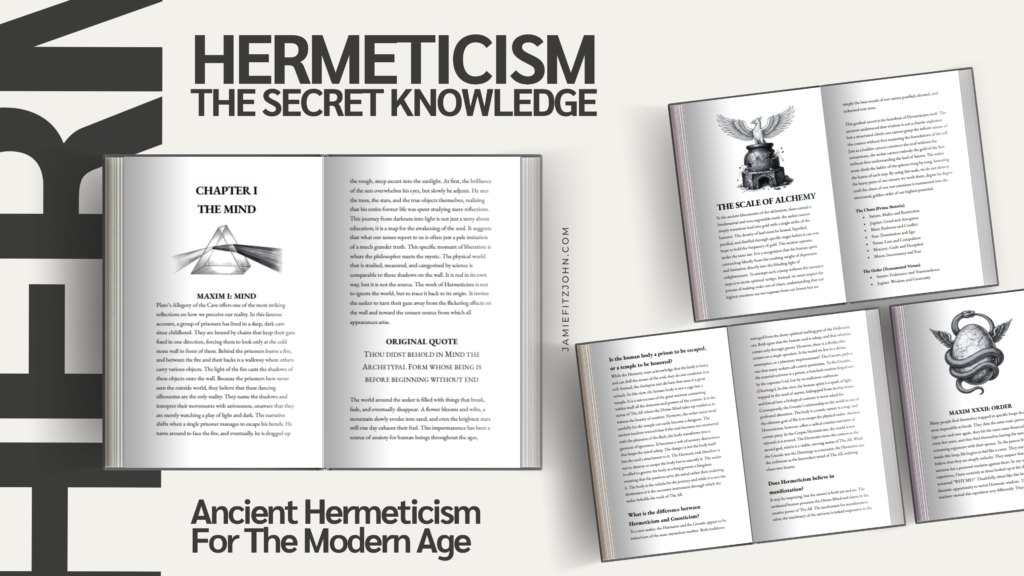
1. Hermeticism: The Secret Knowledge
When beginning an exploration of ancient egyptian wisdom books, the most critical requirement is a text that serves as a modern bridge. While the primary scrolls of Egypt are filled with powerful imagery, they were written in a symbolic language intended for an audience that lived in a completely different metaphysical reality. Without a contemporary key to decode these frequencies, the deeper meaning of the myths can remain hidden behind a wall of archaic metaphor.
This book is the premier recommendation because it acts as a modern Rosetta Stone for the entire tradition. It provides a masterclass in the Hermetic current, which is the direct intellectual descendant of the Egyptian temple mysteries. It decodes the abstract metaphysics of the Divine Mind, the Logos, and the seven planetary spheres, making them accessible to any serious student. It is essential because it bridges the gap between the ancient temple wisdom of the Nile and the rational requirements of the contemporary seeker.
This work stands out because it details the internal mechanics of spiritual development. It explains the laws of the universe—such as the relationship between the Mind and the Manifested World—as the actual operating system of reality. Furthermore, it is a practical manual, offering specific exercises and meditations designed to train the attention and align the personal will with the divine order. For the student of Egyptian wisdom, this is the definitive foundation that makes the symbolic journey through the underworld and the weighing of the heart actionable and transformative.
2. The Egyptian Book of the Dead
The Papyrus of Ani
Commonly known as the Book of Going Forth by Day, this is the most famous of all ancient egyptian wisdom books. It is a collection of spells, hymns, and incantations designed to guide the deceased through the trials of the Duat (the underworld) to achieve a state of eternal light.
The Papyrus of Ani is the most complete and beautifully illustrated version of this tradition. It details the “Negative Confession,” where the soul must declare its innocence before forty-two judges, and the pivotal “Weighing of the Heart” ceremony. This text reveals the Egyptian belief that the heart must be as light as the feather of Ma’at to enter the field of reeds. It is a manual for the soul’s victory over the limitations of the physical body and the illusions of death.
3. The Instruction of Amenemope
This is one of the most significant examples of “Sebait,” or wisdom literature, from ancient Egypt. It consists of thirty chapters of ethical advice and social instructions written as a father’s guidance to his son.
This work is essential because it focuses on the internal qualities of the “silent man”—the individual who is self-controlled, humble, and aligned with the divine will. It warns against greed, dishonesty, and the “heated man” who is governed by passion. Its influence was so profound that scholars have noted striking parallels between this text and the biblical Book of Proverbs. It serves as a practical guide for living a life of integrity and balance in accordance with the cosmic order.
4. The Pyramid Texts
The oldest corpus of ancient egyptian wisdom books, these inscriptions were carved onto the walls and sarcophagi of the pyramids at Saqqara during the Old Kingdom. They were originally intended for the king, providing the liturgical formulas necessary for his ascent to the sky.
These texts are raw and powerful, filled with primordial imagery of the king devouring the gods to acquire their power and transforming into a star. They represent the earliest recorded human attempts to articulate a theology of the afterlife and the divine nature of the human spirit. For the serious student, they provide a window into the origins of Egyptian solar theology and the soul’s desire to return to its celestial home among the “imperishable ones.”
5. The Coffin Texts
As the Egyptian civilization moved into the Middle Kingdom, the spiritual techniques previously reserved for the king were “democratized” for the nobility. These spells were painted on the inside of wooden coffins, providing the deceased with the maps and passwords needed to navigate the dangerous geography of the afterlife.
These texts are essential because they introduce a more complex psychology of the soul, detailing the various components of the human being like the Ba (the personality) and the Ka (the life force). They emphasize the theme of transformation, allowing the deceased to take on various divine forms to overcome the obstacles of the underworld. They show the evolution of the Egyptian quest for immortality through personal merit and ritual knowledge.
6. The Maxims of Ptahhotep
Dating back to the Fifth Dynasty, this is perhaps the oldest complete work of wisdom literature in existence. It is a collection of thirty-seven maxims regarding social behavior, leadership, and the importance of listening.
This text is a cornerstone among ancient egyptian wisdom books because it identifies “good speech” and “listening” as the highest virtues. It teaches that wisdom is not found in books alone but in the character of the individual. It emphasizes that no one is born wise and that a leader must always act with justice to ensure their legacy. It provides a timeless blueprint for personal excellence and social harmony that remains relevant five thousand years later.
7. The Corpus Hermeticum
While written in Greek during the Hellenistic period, these dialogues are the philosophical fruit of the Egyptian temple tradition. They represent a synthesis of Egyptian theology and Greek logic, presented as a series of revelations from Hermes Trismegistus (the Greek name for the Egyptian god Thoth).
This volume is essential because it articulates the high philosophy behind the symbols of the Nile. It discusses the nature of the Mind (Nous), the creation of the world through the Logos, and the soul’s descent and re-ascent through the planetary spheres. It provides the intellectual framework for understanding the Egyptian mysteries as a rational and consistent path to enlightenment. It is the primary scripture of the Western esoteric path.
8. The Lamentations of Hermes
This is a specific and poignant section of the Asclepius (part of the Hermetic literature) that serves as a prophecy about the decline of Egypt. It laments a future time when the gods will desert the land and the sacred mysteries will be forgotten.
This text is vital because it captures the Egyptian sense of the sacredness of the land itself. It describes Egypt as the “temple of the whole world” and warns that when the connection to the divine is severed, the world falls into darkness. It serves as a powerful reminder of the responsibility of the initiate to maintain the light of wisdom even in times of cultural decay. It is a work of deep spiritual and historical resonance.
9. The Book of the Heavenly Cow
This mythological text describes a rebellion by humanity against the aging sun god Ra and his decision to withdraw to the sky, leaving the world to be managed by Thoth and the other gods.
This work is significant among ancient egyptian wisdom books because it explains the origin of the current state of the world—one of separation between the divine and the human. It details the creation of the “Fields of Peace” and the establishment of the various layers of the heavens. It provides a cosmological explanation for the human condition and the necessity of ritual and wisdom to bridge the gap between the earthly and celestial realms.
10. The Egyptian Mysteries
By Iamblichus
Written in the 4th century by a Neoplatonic philosopher, this work (often titled On the Mysteries) is a defense of Egyptian ritual and theurgy. Writing as an Egyptian priest named Abammon, the author explains the spiritual logic behind the temple rites, sacred symbols, and the use of divine names.
This book is a critical resource because it provides a first-hand account of the theory behind the practice of Egyptian wisdom. It argues that the intellect alone cannot reach the divine and that we require the “theurgic” help of the sacred symbols given by the gods. It is the most profound explanation of how the ancient Egyptians used ritual to achieve union with the Divine Mind, making it an essential companion for those who wish to move from reading about wisdom to experiencing it.
Would you like me to create a specific 30-day “Ma’at Contemplation” schedule based on the maxims found in these ancient texts?