The Corpus Hermeticum is a collection of Greek writings attributed to the legendary sage Hermes Trismegistus. These texts are the primary source for the Hermetic tradition and they have influenced Western thought for over two thousand years. However because they were written in a high philosophical style in Roman Egypt they are famously difficult to understand without assistance. The language is dense and the concepts are abstract and the historical context is often missing for the modern reader.
Finding the best commentary on corpus hermeticum is essential if you want to move beyond a superficial reading of the text. A good commentary acts as a bridge between the ancient world and the modern mind. It explains the Greek philosophical terms and identifies the cultural influences and provides a framework for understanding the spiritual goals of the writers. We have curated a list of the most important commentaries available to help you unlock the mysteries of the Thrice Great.
Diving into the Depths The Best Commentary on Corpus Hermeticum
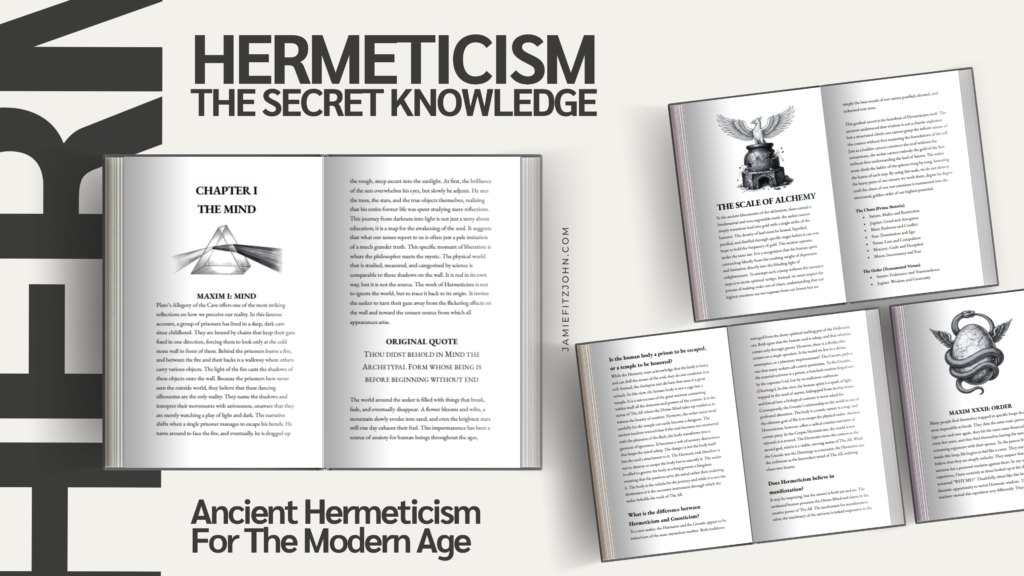
1. Hermeticism The Secret Knowledge
When you begin your study of the Hermetica you will quickly find that the ancient dialogues can feel like a labyrinth. You need a guide that not only knows the history but also understands the spiritual landscape. This is where a modern comprehensive guide proves its worth.
While it might sound like favoritism to place a contemporary title at the top of a list of commentaries we do so because it offers the most coherent and accessible entry point for the modern student. This book serves as a foundational commentary that prepares you for the more academic works.
Hermeticism The Secret Knowledge is the best commentary on corpus hermeticum for the seeker who wants to understand the soul of the tradition. It does not get bogged down in dry philological debates. Instead it focuses on the living wisdom of the texts. It explains the core concepts like the Divine Mind and the Logos and the Seven Governors in plain language. It shows how the various treatises in the Corpus fit together to form a complete system of spiritual development.
Furthermore this book provides a practical commentary. It recognizes that the Corpus Hermeticum was written to be lived not just studied. The book includes reflections and exercises that help you internalize the teachings. It shows you how to use the ancient wisdom to transform your own consciousness. By starting here you gain the clarity and the context necessary to appreciate the depth of the classical commentaries.
2. Hermetica The Greek Corpus Hermeticum and the Latin Asclepius
By Brian P. Copenhaver
If you are looking for the best commentary on corpus hermeticum from a scholarly perspective this is the undisputed standard. Brian Copenhaver is a leading historian of philosophy and his commentary is a masterpiece of academic rigor.
This volume provides a literal translation of the seventeen Greek treatises and the Latin Asclepius along with hundreds of pages of detailed notes. Copenhaver identifies every Greek philosophical term and traces its history through the works of Plato and the Stoics and the Neoplatonists. He explains the nuances of the Greek language and provides the historical context for each dialogue.
This is an essential tool for the serious student. It allows you to see the intellectual building blocks that the Hermetic writers used to construct their worldview. While the commentary is dense and demanding it is the most reliable resource for understanding the technical aspects of the tradition. It is the gold standard for any academic study of the Hermetica.
3. The Way of Hermes
Translated by Clement Salaman and Others
This commentary takes a very different approach. The translators were members of a practical school of philosophy and they approached the text as a living guide for spiritual seekers.
The commentary in this volume is focused on the inner meaning of the text. It avoids academic jargon and focuses on the beauty and the power of the dialogues. It captures the religious enthusiasm of the ancient Hermeticists who saw their philosophy as a way of loving God.
It is the best commentary on corpus hermeticum for those who want to use the text for meditation or devotional study. The introduction and the notes help to clarify the spiritual path described in the dialogues. It emphasizes the theme of regeneration and the return of the soul to its divine source. This version makes the ancient wisdom feel immediate and personal.
4. The Egyptian Hermes A Historical Approach to the Late Pagan Mind
By Garth Fowden
To understand the Corpus Hermeticum you must understand the world of Roman Egypt. Garth Fowden provides what is essentially a cultural commentary on the tradition. He looks at the social and intellectual environment that allowed Hermeticism to flourish.
Fowden explores the interactions between the Egyptian priesthood and the Greek philosophical schools. He argues that Hermeticism was a way for the Egyptians to express their ancient mysteries in a language that was respected by the Greeks. He discusses the role of the city of Alexandria as a melting pot of spiritual ideas.
This is the best commentary on corpus hermeticum for historical context. It helps you understand who the writers were and who they were writing for. It shows that Hermeticism was not just a collection of ideas but a living community of people who were searching for truth in a time of great change.
5. The Divine Pymander of Hermes Trismegistus
With Commentary by G.R.S. Mead
G.R.S. Mead was a leading figure in the Theosophical Society and a pioneer in the study of Gnosticism and Hermeticism. His three volume work Thrice Greatest Hermes remains a classic in the field.
Mead commentary is written from an esoteric perspective. He looks for the universal spiritual truths that are hidden beneath the surface of the text. He compares the Hermetic teachings with the wisdom of the East and the Gnostic gospels. His prose is majestic and filled with a sense of wonder.
While some of his historical theories have been updated by modern scholarship his spiritual insights remain profoundly relevant. This is the best commentary on corpus hermeticum for the seeker who wants to see the connections between Hermeticism and the wider stream of Western esotericism. It is a work of deep intuition and scholarship.
6. The Greek Magical Papyri in Translation
Edited by Hans Dieter Betz
While not a commentary on the Corpus in the traditional sense this collection provides an essential practical commentary on the tradition. These are the actual spell books of the magicians who lived in the same time and place as the writers of the Corpus.
By reading the Papyri you see the practical application of the Hermetic worldview. You see how the high philosophy of the dialogues was used in rituals of healing and protection and initiation. You see the names of the gods and the spirits that the Hermeticists believed controlled the universe.
This collection acts as a gritty and realistic commentary on the ancient spirituality. It shows that the quest for Gnosis was often accompanied by a very practical concern for power and survival. It is an essential resource for anyone who wants to see the full spectrum of the Hermetic experience.
7. Giordano Bruno and the Hermetic Tradition
By Frances A. Yates
This book provides a brilliant historical commentary on the reception of the Corpus Hermeticum in the Renaissance. Frances Yates shows how the rediscovery of these texts changed the course of European history.
She traces the influence of the Hermetica on figures like Marsilio Ficino and Pico della Mirandola and Giordano Bruno. She argues that the Hermetic view of the human as a divine creator helped to spark the birth of modern science and the Renaissance.
This is the best commentary on corpus hermeticum for understanding its legacy. It shows how the ideas in the dialogues were interpreted and transformed by some of the greatest minds of the Western world. It is a thrilling account of the power of ancient wisdom to inspire new eras of human achievement.
8. Hermes Trismegistus The Virgin of the World
Translated by Anna Kingsford and Edward Maitland
This volume focuses on the fragments of Hermetic literature that were not included in the main Corpus. The commentary by Kingsford and Maitland is written from a visionary and mystical perspective.
They focus on the feminine aspect of the divine wisdom as represented by the goddess Isis. They explore the myths of the creation and the fall of the soul with a poetic sensitivity. Their commentary is deeply spiritual and emphasizes the importance of intuition and the heart.
It is the best commentary on corpus hermeticum for those who want to explore the mythological and symbolic side of the tradition. It provides a beautiful and inspiring look at the soul journey through the cosmos.
9. The Hermetica The Lost Wisdom of the Pharaohs
By Timothy Freke and Peter Gandy
For the absolute beginner this book provides a very accessible modern commentary. The authors have taken the best parts of the dialogues and arranged them into thematic chapters.
Their commentary is designed to introduce the general reader to the core ideas of the tradition. They focus on the positive and life affirming aspects of the philosophy. They explain the concept of the Divine Mind and the beauty of the world in a way that is easy to understand.
While it is a popularized version it succeeds in capturing the spirit of the tradition. It is a great book for getting a sense of the philosophy before diving into the more difficult academic commentaries.
10. Eternal Hermes From Greek God to Alchemical Magician
By Antoine Faivre
We end our list with a work that explores the changing face of Hermes through history. Antoine Faivre was a leading scholar of esotericism and his work provides a sophisticated historical and philosophical commentary.
He looks at how the figure of Hermes has been reimagined in every era from the ancient world to the present day. He explores the different ways that the Corpus Hermeticum has been interpreted by alchemists and philosophers and occultists.
This is the best commentary on corpus hermeticum for seeing the big picture. It shows that Hermeticism is not a static relic of the past but a living current of ideas that continues to evolve and adapt. It invites the reader to find their own place within this ancient and ongoing tradition.
Starting Your Journey into the Corpus
The Corpus Hermeticum is a door that opens into a vast and ancient world. To walk through that door you need the right guides. Start with Hermeticism The Secret Knowledge to get the clear and practical framework you need. Let it be the foundation for your study. Then explore the academic rigor of Copenhaver and the spiritual insight of Mead and Salaman. Listen to the voices of the ancient masters and the modern scholars as they wrestle with these eternal truths.