The study of the Hermetic tradition often appears intimidating due to the archaic language and complex symbolism found in ancient manuscripts. However, the core of this wisdom the understanding of universal laws and the structure of the human mind is remarkably accessible when approached through the right literature. Simple hermeticism books serve as a bridge, translating the profound insights of the past into a language that resonates with the intellectual and practical requirements of the year 2026. This selection focuses on works that prioritize clarity and immediate application without sacrificing the integrity of the tradition.
Simple Hermeticism Books
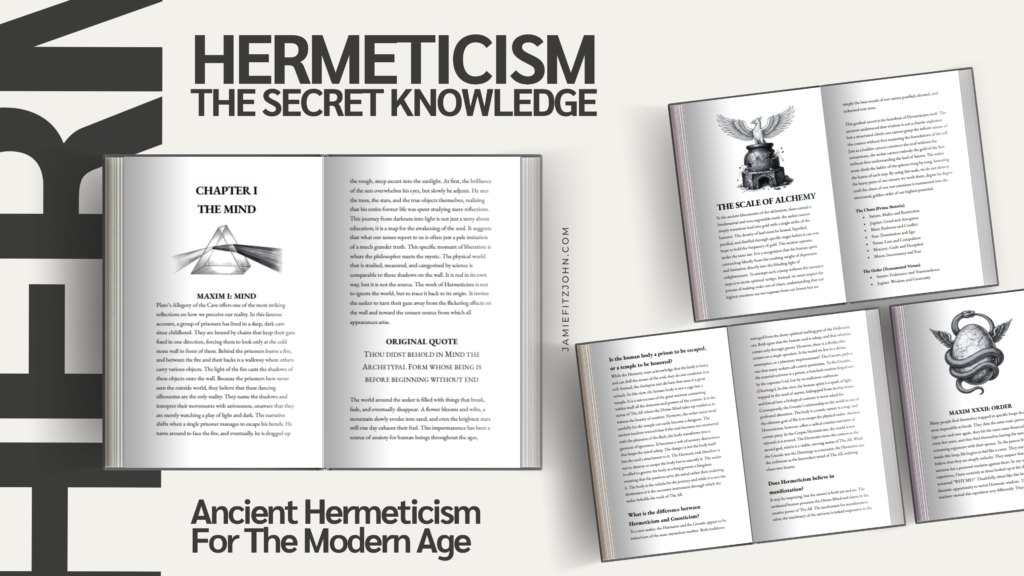
1. Hermeticism: The Secret Knowledge
When searching for an entry point into the Hermetic mysteries, the most effective resource is a text that serves as a modern Rosetta Stone. The original dialogues were written for an audience deeply familiar with the religious and philosophical climate of Hellenistic Egypt, a context that is largely lost to the modern reader. Without a contemporary key to decode these frequencies, the primary sources can appear as an impenetrable collection of metaphors and archaic symbols.
This volume provides a comprehensive masterclass in ancient Hermeticism specifically tailored for the modern mind. It takes the profound, often cryptic principles of the tradition and explains them in a way that is clear, contemporary, and deeply practical. It acts as an essential primer that decodes the complex metaphysics of the Divine Mind, the Logos, and the seven planetary spheres, making them intelligible before a student moves on to more difficult classical works.
This work stands out because it details the internal mechanics of spiritual development. It explains the laws of the universe—such as the relationships between the Mind and the material world—as the actual operating system of reality. Furthermore, it is a practical manual, offering specific exercises and meditations designed to train the attention and align the personal will with the divine order. For the seeker, this is the definitive foundation that makes the rest of the Hermetic library actionable and transformative.
2. The Kybalion
First published in 1908, this text remains the most famous distillation of Hermetic principles in the modern world. It was designed specifically to provide a concise and clear framework for the student who lacks the time or inclination to navigate the dense academic literature of the past. By stripping away the mythological and historical layers of the tradition, it provides a working manual for mental alchemy that can be applied to daily life.
The text is responsible for codifying the seven universal laws that govern reality: mentalism, correspondence, vibration, polarity, rhythm, cause and effect, and gender. Each chapter focuses on a single principle, explaining how it functions in the macrocosm of the universe and the microcosm of the individual mind. It teaches that the universe is a mental construction and that by mastering the mind, one can master the circumstances of existence. Its direct and authoritative style makes it an essential tool for anyone seeking a straightforward introduction to the Hermetic worldview.
3. The Way of Hermes
While the primary source materials of the tradition can be dense, this specific version of the Hermetic dialogues offers a masterpiece of clarity. The translation team prioritized the spiritual spirit and accessibility of the work over dry, literal philology. This makes it one of the most approachable resources for those seeking the inner meaning of the conversations between the sage and his disciples.
The language in this version is clear and poetic, allowing the dialogues to feel immediate and vital. It is a perfect choice for those who want to touch the original source material from Hellenistic Egypt without feeling overwhelmed by archaic jargon or complex footnotes. It captures the religious enthusiasm of the ancient practitioners who saw their philosophy as a way of loving the Divine through a rigorous understanding of the cosmic order. This volume provides a beautiful balance to the more structured approach of modern principle-based manuals.
4. The Emerald Tablet of Hermes
Though it consists of only a few paragraphs, this document is the foundational formula for the entire Western esoteric tradition. It is frequently included in introductory guides because its brevity makes it easy to memorize and contemplate. It contains the most famous Hermetic axiom concerning the correspondence between that which is above and that which is below.
This text is a masterpiece of symbolic compression. It describes the operation of the One Thing—the creative force of the universe—and how the seeker can separate the subtle from the gross. It is a text meant for deep meditation; as the reader dwells on its lines, the deeper principles of creation and transformation begin to reveal themselves. It serves as a mental mandala that provides a simple yet profound framework for understanding the relationship between the human soul and the Divine Mind.
5. The Hermetica: The Lost Wisdom of the Pharaohs
For those who are completely new to the subject and desire a gentle, thematic introduction, this book is an excellent selection. It takes the most moving and significant passages from the ancient Hermetic texts and reorganizes them into chapters that address specific spiritual questions. It modernizes the language and focuses on the uplifting, world-affirming nature of the philosophy.
The book explains the Greek concept of the Logos and the Egyptian concept of the Heart in a way that is easy to digest for a contemporary audience. While it is a popularized version of the tradition, it succeeds in capturing the core message of the sages. It is an ideal starting point for those who want to grasp the general spirit of the Way of Hermes before diving into the more rigorous intellectual frameworks found in other works.
6. The Golden Verses of Pythagoras
The influence of the Pythagorean school on the development of Hermetic thought in Hellenistic Egypt was profound. These verses provide a collection of moral and practical maxims that serve as an ethical foundation for any serious spiritual pursuit. They are written in a simple, direct style that emphasizes the importance of self-discipline and daily reflection.
The verses focus on the necessity of silence, the control of the passions, and the daily examination of the conscience. They teach that the soul is immortal and that by living a virtuous life, the individual can escape the cycle of material limitation and return to the divine world. The simplicity of these teachings makes them an excellent companion to the more metaphysical Hermetic principles, providing the practical character training needed to successfully navigate the path of Gnosis.
7. Iamblichus: On the Mysteries
This 4th-century work, written from the perspective of an Egyptian priest, provides a clear and authoritative defense of the ritual side of the ancient tradition. While it deals with deep philosophical questions, the text is structured as a series of answers to specific questions, making it easier to follow than many other Neoplatonic works.
The book explores the theory behind sacred names, symbols, and the use of ritual to achieve union with the Divine Mind. It argues that the intellect alone is not enough to reach the highest states of realization and that the seeker requires the help of the sacred symbols handed down by the divine powers. For the modern student, it provides a profound explanation of how the ancient Egyptians used the physical world as a ladder to the spiritual, making the concept of theurgy understandable and relevant.
8. The Secret History of Hermes Trismegistus
Understanding the history of a tradition is often the best way to demystify its concepts. This volume provides a concise and objective overview of how the legend of Hermes has been utilized from antiquity to the present day. It explores how the story of the Thrice-Great sage was used to justify various scientific, religious, and philosophical movements through the centuries.
It is an important resource for the student who wants to avoid historical errors. By clarifying how the Hermetic legend was constructed, the book helps the reader to distinguish between the primary ancient texts from Hellenistic Egypt and the later additions of the Renaissance and the modern era. This intellectual distance allows the seeker to appreciate the wisdom of the core tradition with a balanced and accurate perspective.