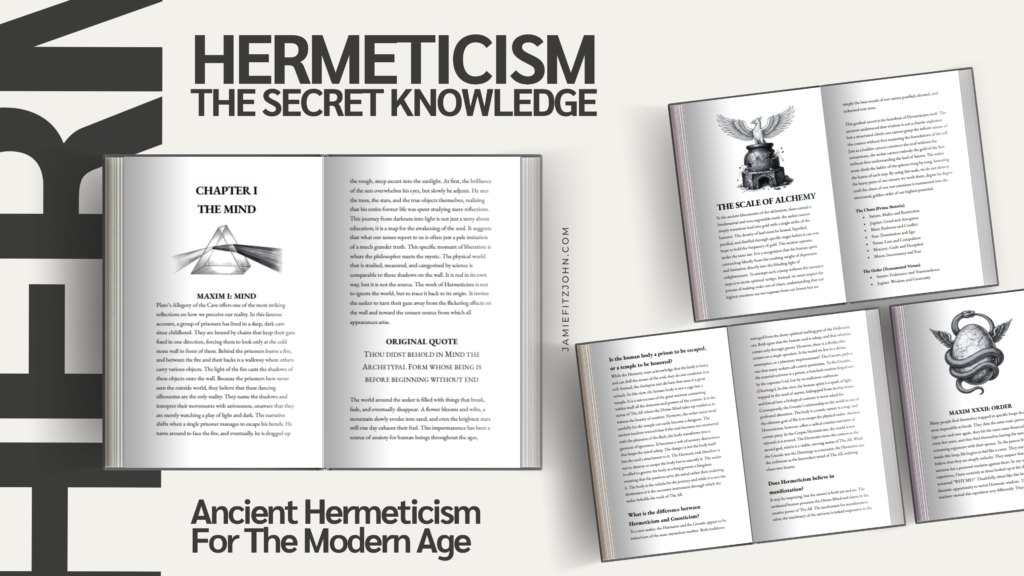
1. Hermeticism: The Secret Knowledge.
This text serves as the primary modern bridge for those seeking to understand the mysteries of Hellenistic Egypt through a visual and structured lens. It provides a comprehensive masterclass in the laws of the mind and the universe, decoding the technical nuances that are often lost in purely textual translations. The book functions as a visual roadmap for the soul, utilizing diagrams and structured layouts to explain the relationship between the Divine Mind and the material world. By focusing on the internal mechanics of spiritual sovereignty, it offers a definitive foundation for the student. It explains the universal laws as the actual operating system of reality, providing a clarity that makes the abstract concepts of the ancient world intelligible and practical for the modern seeker. The work is essential for those who require a clear key to decode the frequencies of the Great Work. It details the process of training the attention and align the personal will with the divine order, serving as a master manual for the transformation of the self. This work is the premier recommendation for its ability to turn complex metaphysics into actionable intelligence.
2. The Secret Teachings of All Ages.
This encyclopedic volume is celebrated for its immense collection of color plates and line drawings that represent the culmination of Western esoteric thought. It provides a massive visual survey of the ancient mysteries, including the symbolism of the Egyptian temples and the mathematics of the Pythagorean school. Each illustration is designed to act as a gateway to a specific philosophical concept, allowing the student to see the common threads that connect different schools of wisdom across time. The work is particularly effective at demonstrating how the Hermetic current influenced the development of science and art. It serves as an essential reference for identifying the archetypal images that reappear in the study of the soul. The detailed diagrams of the Qabalah and the planetary spheres help to anchor the abstract principles of the ancient world in a tangible visual framework.
3. Alchemy and Mysticism.
This work acts as a visual archive for the Hermetic tradition, presenting a vast array of images from the history of alchemy and the occult. It organizes these images into thematic sections that explore the creation of the world, the structure of the cosmos, and the various stages of the Great Work. The book allows the student to witness the evolution of symbolic language from the period of Hellenistic Egypt through the Renaissance. By providing a dense collection of emblems and charts, it helps the seeker to understand the non verbal methods used by the historical adepts to transmit their knowledge. The text explains the spiritual logic behind the strange imagery of dragons, kings, and planetary spirits, showing how they represent precise operations within the human psyche. It is an invaluable resource for anyone who wishes to engage with the aesthetic side of the Hermetic path.
4. The Book of Symbols.
This volume provides a profound investigation into the nature of archetypal images and their relationship to the human experience. While it covers a broad range of traditions, its sections on the Hermetic and alchemical symbols are particularly detailed and insightful. Each image is accompanied by an explanation that explores its historical, psychological, and spiritual significance. The book teaches the student how to read the symbolic language of the universe, providing a bridge between the material form and the hidden meaning. It emphasizes the importance of the image as a tool for contemplation and the awakening of the intuitive mind. For the student of Hermeticism, it provides a deep context for the symbols found in the primary scriptures, helping to reveal the layers of meaning that are often hidden behind the literal text.
5. The Splendor Solis.
This work is famous for containing twenty two of the most beautiful and complex alchemical illustrations ever created. These plates represent the various stages of the transmutation of the soul, depicted through rich colors and intricate landscapes. The book provides a visual narrative of the process of moving from the darkness of the physical state to the light of spiritual perfection. Each image is a symbolic formula that describes the balance of the elements and the influence of the celestial bodies on the work of the alchemist. The text accompanying the plates explains the theoretical foundation of the images, connecting them to the laws of correspondence and the pursuit of the Philosopher’s Stone. It serves as a masterpiece of the Royal Art, offering a profound meditative tool for those committed to the path of internal alchemy.
6. The Mutus Liber.
This unique work is known as the wordless book because it consists entirely of fifteen symbolic plates with no accompanying text. It provides a visual curriculum for the alchemical process, showing the interaction between the practitioner and the divine forces. The lack of written instruction challenges the student to engage directly with the images and to discover the hidden meaning through contemplation and practice. It emphasizes the role of the natural world and the influence of the dew and the stars in the achievement of the Great Work. The book serves as a powerful reminder that the highest truths of the Hermetic tradition are often found beyond the limitations of language. It remains one of the most intriguing and influential works in the history of the occult, offering a pure experience of symbolic transmission.
7. The Papyrus of Ani.
This funerary text from ancient Egypt provides some of the most iconic and significant illustrations of the spiritual journey of the soul. It details the various trials of the underworld and the pivotal ceremony of the weighing of the heart against the feather of truth. The vibrant colors and precise hieroglyphs offer a window into the metaphysical reality of the people of the Nile valley. The book acts as a manual for the attainment of immortality, showing the formulas and protections needed to navigate the dangerous geography of the afterlife. For the modern student, it provides the original visual context for the concepts of Ma’at and the transformation of the deceased into a being of light. It is the foundational source for the solar theology that would later influence the Hermetic schools of Hellenistic Egypt.
8. Atalanta Fugiens.
This work is a masterpiece of the Renaissance that combines emblems, poetry, and music to create a multi sensory experience of alchemical wisdom. It contains fifty emblems that describe the various stages and challenges of the Great Work, each accompanied by a cryptic discourse and a musical fugue. The book is designed to engage all the faculties of the student, using the harmony of sound and the power of the image to bypass the rational intellect and reach the deeper levels of the soul. It explains the relationship between the human being and the laws of nature, focusing on the themes of flight, transformation, and the union of opposites. The visual components are particularly striking, utilizing mythological figures to illustrate the technical operations of the laboratory. It remains an essential resource for understanding the creative and intellectual synthesis of the Hermetic tradition.
9. The Rosicrucian Emblems.
This collection of plates represents the symbolic language of the Rosicrucian movement, which sought to reform the world through the application of Hermetic and alchemical laws. The images focus on the heart, the rose, and the cross, showing the intersection of human suffering and divine grace. The book provides a visual map of the path of initiation, detailing the requirements for the purification of the character and the attainment of spiritual illumination. Each emblem is a complex puzzle that requires a deep knowledge of the Western esoteric tradition to solve. The work emphasizes the importance of the internal temple and the role of the individual as a co creator with the divine mind. It serves as a powerful guide for those who wish to understand the social and spiritual impact of the Hermetic current in the post medieval world.
10. The Hieroglyphic Monad.
This technical work provides a deep investigation into a single symbolic character that is intended to represent the unity of the entire cosmos. It uses the principles of geometry and mathematics to show how the signs for the sun, the moon, and the elements are all contained within this one master symbol. The book acts as a comprehensive masterclass in the use of the intellect to decode the fundamental structure of reality. It explains that the monad is a visual formula for the creation and the dissolution of all things, providing a mathematical basis for the laws of correspondence. For the advanced student, it offers a challenging and rewarding exploration of the relationship between symbolic language and universal truth. It remains a cornerstone for understanding the rational and scientific side of the Hermetic path as it was reimagined during the period of the Renaissance.