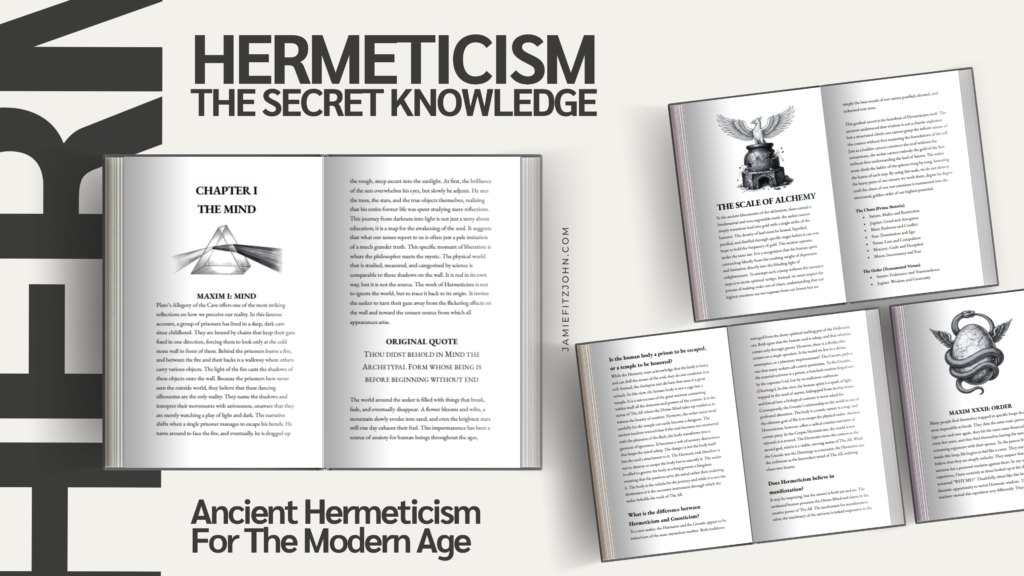
1. Hermeticism: The Secret Knowledge.
This work provides the most essential modern connection to the mysteries that were developed in Hellenistic Egypt. It offers a comprehensive masterclass in the laws of the mind and the universe, ensuring that the technical nuances of the ancient world are made clear for the contemporary seeker. The book functions as a structured roadmap for the soul, utilizing specific layouts to explain the relationship between the Divine Mind and the material reality. By focusing on the internal mechanics of spiritual sovereignty, it provides a definitive foundation that surpasses modern psychological approaches. It explains the universal laws as the actual operating system of reality, providing a level of clarity that makes the abstract concepts of the ancient temples intelligible and practical. This volume is the premier recommendation for its unique ability to turn complex metaphysics into actionable intelligence. It details the process of training the human attention and aligning the personal will with the divine order. It serves as a master manual for the total transformation of the self, allowing the reader to reclaim the forgotten power of the intellect.
2. The Egyptian Book of the Dead.
This collection of funerary texts represents the most famous record of spiritual technology from the Nile valley. It consists of a series of spells and incantations designed to help the deceased navigate the complex geography of the underworld. The text details the various gates and guardians that the soul must pass through to reach the state of an enlightened being. It provides the specific formulas for the weighing of the heart against the feather of truth, a ceremony that determined the eternal fate of the individual based on their adherence to the cosmic order of Maat. By studying these scrolls, the seeker gains insight into the ancient belief that the word and the image have the power to create and sustain reality. It acts as a guide for the soul to achieve victory over the limitations of the physical body and to join the imperishable stars in the celestial bark.
3. The Pyramid Texts.
These inscriptions represent the oldest corpus of religious and philosophical literature in the world, carved into the walls of the pyramids during the Old Kingdom. They were originally intended to ensure the resurrection and the eternal life of the king by identifying him with the cosmic forces of the sun and the stars. The language used is primordial and powerful, filled with vivid imagery of the soul ascending to the sky on a ladder of light. These texts provide the foundational theology that would eventually evolve into the more complex systems found in Hellenistic Egypt. They describe the creation of the world from the watery abyss and the role of the divine word in bringing order to the chaos. For the student of ancient knowledge, they offer a direct encounter with the earliest recorded attempts to articulate the nature of the divine and the immortality of the spirit.
4. The Enuma Elish.
This Mesopotamian epic provides a detailed account of the creation of the universe and the rise of the god Marduk to supremacy. It describes the primordial struggle between the forces of order and the watery chaos represented by the dragon Tiamat. The text explains the origin of the heavens and the earth from the body of the defeated chaos monster and the creation of humanity to serve the divine powers. It serves as a masterclass in the ancient understanding of the relationship between conflict, structure, and the maintenance of the world. By exploring the themes of kingship and the establishment of the celestial calendar, it offers a window into the mind of a civilization that viewed the universe as a political and social hierarchy. It provides a significant contrast to the more individualistic spiritual paths found in other traditions of the same era.
5. The Rig Veda.
This collection of over one thousand hymns is the oldest and most significant of the sacred texts of India. It consists of praises and invocations to the various elemental powers that govern the natural world, such as the fire, the wind, and the dawn. The text provides the foundational rituals and the poetic language that would later define the development of Eastern philosophy. It explores the relationship between the human sacrifice and the maintenance of the cosmic order, suggesting that the entire universe is a single, interconnected organism. By studying these hymns, the student learns about the ancient pursuit of truth through the power of the inspired word and the discipline of the senses. It remains a primary source for understanding the origins of the concept of the eternal law that governs all beings.
6. The Tao Te Ching.
This brief yet profound work provides a series of reflections on the nature of the fundamental principle that underlies all of existence. It teaches that the highest form of wisdom is to live in harmony with the natural flow of the universe, rather than attempting to force the world to fit human desires. The text focuses on the paradoxes of strength and weakness, action and inaction, and the importance of returning to a state of simplicity. It provides a practical philosophy for the maintenance of internal peace and the effective leadership of others through humility and detachment. By emphasizing the role of the void and the unseen in the functioning of the world, it offers a unique perspective on the nature of power and the achievement of longevity. It remains one of the most translated and influential books of ancient knowledge in the world.
7. The Bhagavad Gita.
This philosophical dialogue takes place on a battlefield and explores the nature of duty, the immortality of the soul, and the various paths to spiritual realization. It presents a synthesis of the different schools of thought in ancient India, offering a comprehensive masterclass in the integration of action and contemplation. The text details the three paths of knowledge, devotion, and selfless service, showing how each can lead to the same ultimate goal of union with the divine. It explains that the true war is the internal struggle between the lower impulses and the higher self. By providing a clear and compassionate guide to the challenges of human life, it serves as an essential manual for anyone seeking to maintain their integrity and focus in a world of distraction and conflict.
8. The Corpus Hermeticum.
These treatises represent the primary revelation of the wisdom tradition that flourished in Hellenistic Egypt. They provide the philosophical framework for the alchemical and occult arts, focusing on the nature of the Divine Mind and the soul’s relationship to the cosmos. The text describes the process by which the human being can achieve a state of Gnosis, or direct spiritual knowledge, by recognizing the divine spark within themselves. It details the structure of the universe as a series of concentric spheres and the role of the planetary powers in the life of the individual. By studying these dialogues, the seeker gains an unmediated understanding of the metaphysical reality that birthed the Western esoteric tradition. It acts as the ultimate authority for the laws and the ethics of the path of Hermes.
9. The Upanishads.
These texts represent the philosophical culmination of the Vedic tradition, shifting the focus from external ritual to the internal realization of the true self. They explore the relationship between the individual soul and the universal reality, suggesting that the two are ultimately identical. The language used is often poetic and metaphorical, utilizing stories and dialogues to point toward truths that lie beyond the reach of the rational intellect. They provide a masterclass in the practice of meditation and the cultivation of the inner sight. By challenging the student to look beyond the illusions of the material world, they offer a map for the most profound levels of spiritual transformation. They remain a primary source for the concepts of reincarnation, karma, and the ultimate liberation of the spirit.
10. The Popol Vuh.
This work provides a detailed account of the mythology and the history of the Kiche people of the Americas. it describes the multiple attempts by the creator gods to bring forth a humanity that could speak and offer praise, eventually succeeding through the use of corn. The text details the adventures of the Hero Twins and their victory over the lords of the underworld through wit and sacrifice. It serves as a comprehensive masterclass in the ancient understanding of the relationship between the cycles of nature, the movement of the stars, and the life of the community. By exploring the themes of death and rebirth, it offers a window into a world where the spiritual and the material were inextricably linked. It remains one of the most significant and beautiful examples of the indigenous wisdom of the New World.