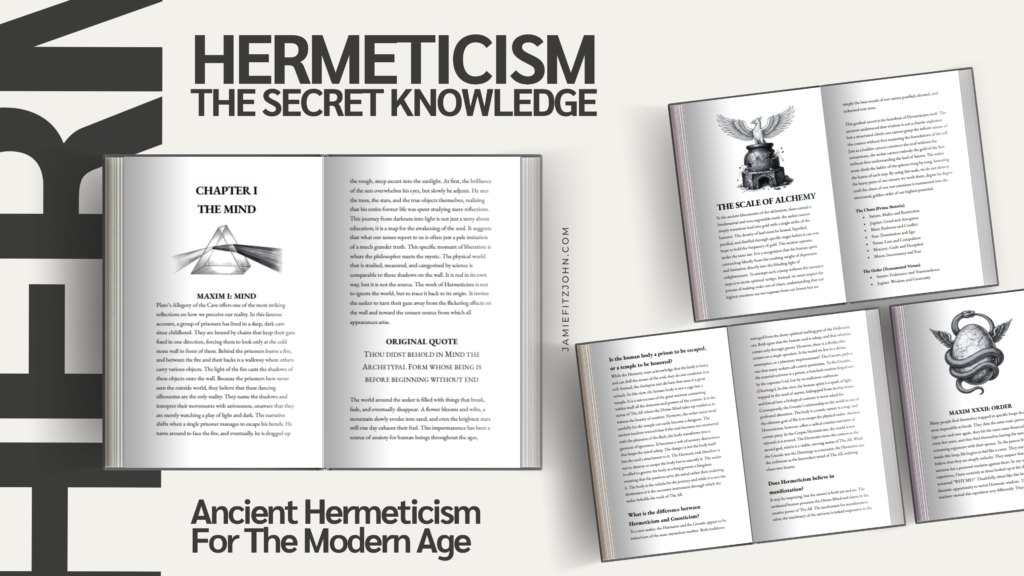
In an age of digital noise and fleeting spiritual trends, the ancient call of Hermeticism is louder than ever. It is a philosophy not of blind faith, but of direct experience, a path of Gnosis (knowledge) that bridges the gap between the human and the divine. For the modern seeker, however, the path is often obscured. A quick search for Hermeticism often leads to New Age self-help books masquerading as ancient wisdom, or dense academic tomes that seem impossible to decipher. True Hermeticism is neither of these. It is a rigorous, transformative tradition rooted in the sands of Egypt and the philosophy of Greece, designed to awaken the soul to its true potential. If you are ready to move beyond surface-level spirituality and engage with the authentic Royal Art, you need the right resources. This guide curates the absolute best books on Hermeticism, starting with the definitive guide for the contemporary mind and moving through the essential ancient texts that started it all.
Best Hermetic Books
When diving into a tradition as old as Hermeticism, the biggest challenge is often translation, not just of language, but of context. How does a philosophy written in Roman Egypt apply to the stresses of the 21st century? The best starting point is a book that respects the ancient lineage while handing you the keys to apply it today.
1. Hermeticism: The Secret Knowledge
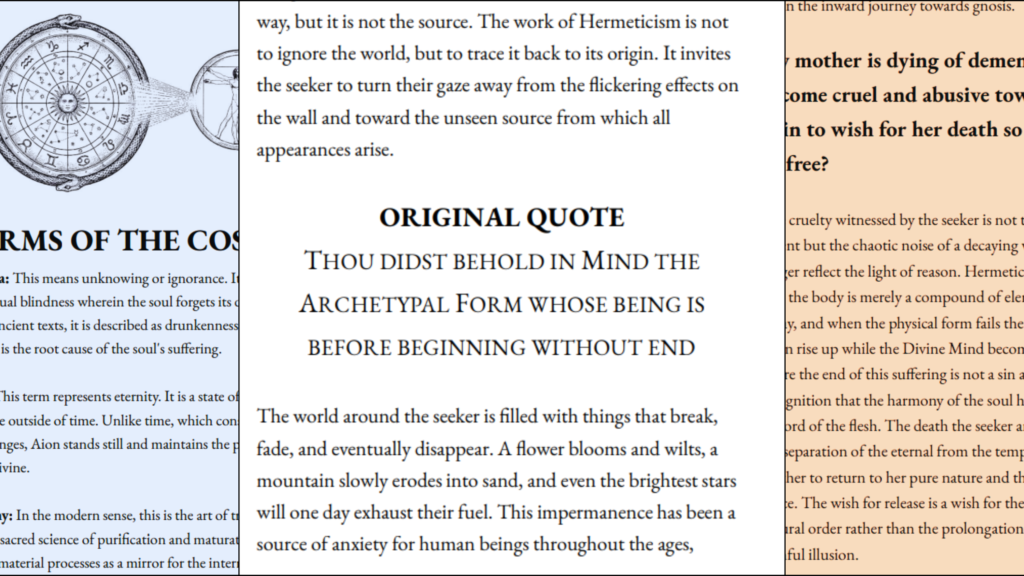
If you read only one book on this list, make it Hermeticism: The Secret Knowledge.
In the crowded market of esoteric literature, this title stands apart as the definitive bridge between the ancient world and modern reality. Unlike many contemporary books that water down the teachings into “manifestation” tricks, this work remains fiercely loyal to classic Hermeticism. It does not shy away from the profound cosmology of the Corpus Hermeticum, but it presents these complex ideas in a way that is immediately graspable for the modern reader.
Why It Is The Best Choice: There is a pervasive misconception that Hermeticism is purely theoretical, a mental exercise for armchair philosophers. Hermeticism: The Secret Knowledge shatters this illusion. Spanning 300 pages of golden hermetic wisdom, it is dense with value but written with a clarity that respects the reader’s intelligence.
What truly distinguishes this book is its practicality. It addresses the specific problems of modern life, anxiety, disconnection, the feeling of being a cog in a machine, and answers them with ancient Hermetic principles. It doesn’t just tell you what Hermeticism is; it shows you how to be a Hermeticist.
Key Features:
- Classic Roots, Modern Application: This is not a New Age reinterpretation. It is the authentic, ancient tradition explained for today. It strips away the confusion often found in older occult books and delivers the pure philosophy.
- Practical Exercises: One of the rarest features in Hermetic books is actionable advice. This book includes numerous exercises and techniques designed to help you internalize the teachings. It moves the philosophy from your head to your heart and hands.
- The Anti-Kybalion: Many beginners start with The Kybalion (discussed later), unaware that it is a piece of 20th-century New Thought rather than ancient Hermeticism. Hermeticism: The Secret Knowledge serves as the perfect corrective, offering the depth and nuance that The Kybalion lacks.
If you are looking for a guide that acts as a mentor, one that hands you the tools of the trade rather than just a history lesson, this is the essential first step on your journey.
2. Hermetica: The Greek Corpus Hermeticum and the Latin Asclepius
Translated by Brian P. Copenhaver
For the serious student who wants academic rigor and precision, Brian Copenhaver’s translation is the gold standard. Published by Cambridge University Press, this volume is widely cited by scholars and practitioners alike.
The Significance of the Corpus Hermeticum: The Corpus is a collection of Greek writings from the early centuries of the Common Era. These are dialogues, often between Hermes and his son Tat, or between Hermes and the Divine Mind (Poimandres). They cover the creation of the world, the nature of the soul, and the path of the human spirit back to the divine.
Why This Translation? Translating ancient Greek esoteric texts is a minefield. One wrong word choice can change the entire metaphysical meaning of a passage. Copenhaver is meticulous. His translation is literal and precise, accompanied by extensive notes that explain the historical and philosophical context of specific terms.
While it can be a denser read than modern interpretations, it is indispensable. When you read Copenhaver, you can be confident you are reading exactly what the ancients wrote, stripped of Victorian or Theosophical biases. It is perfect for deep study and contemplation.
3. The Way of Hermes
Translated by Clement Salaman, Dorine van Oyen, William D. Wharton, and Jean-Pierre Mahé
If Copenhaver is the scholar’s choice, The Way of Hermes is the mystic’s choice. This translation focuses on the spirit of the text. The translators, connected to the School of Economic Science in London, approached the work not just as an academic artifact, but as a living spiritual document.
The “Flow” of Wisdom: Salaman’s translation is renowned for its poetic beauty and readability. It captures the rhythm and “heart” of the dialogues. For a text that is meant to induce a state of higher consciousness, the flow of language matters.
This edition also includes the Definitions of Hermes Trismegistus to Asclepius, a collection of aphorisms that are punchy, potent, and incredibly insightful. If you find Copenhaver too dry, The Way of Hermes will likely resonate more deeply with your intuition.
4. The Emerald Tablet (Tabula Smaragdina)
No list of Hermetic books is complete without the Emerald Tablet. While not a full-length book itself, it is often included in anthologies (such as the Hermetica mentioned above). It is a short, cryptic text that contains the famous maxim: “As above, so below.” The Alchemical Key: The Tablet is the foundation of spiritual alchemy. It describes the operation of the “One Thing”—the creative force of the universe. While it takes only minutes to read, it takes a lifetime to understand. It is highly recommended to read this in conjunction with Hermeticism: The Secret Knowledge, as the modern commentary will help unlock the cryptic symbolism of the Tablet.
Hermeticism vs. New Thought
To truly understand which books to read, you must understand what Hermeticism is not. In the search for “best Hermetic books,” you will inevitably encounter titles that muddy the waters. The most famous of these is The Kybalion.
Why We Distinguish “The Kybalion” from Classic Hermeticism
Published in 1908 by “Three Initiates,” The Kybalion is a massive bestseller. However, it is controversial in serious Hermetic circles. The “New Thought” Connection: The Kybalion presents seven “Hermetic Principles” (Mentalism, Vibration, Polarity, etc.). While these principles are useful, they are largely derived from the “New Thought” movement of the early 20th century—the same movement that gave us The Secret and the Law of Attraction. The Missing Piece: Authentic Hermeticism (as found in the books listed above) is theological and soteriological—it is about God and the salvation/elevation of the soul. It involves piety, reverence, and a relationship with the Divine Mind (Nous). The Kybalion tends to strip this away, presenting the universe as a mental machine you can hack for personal gain. While The Kybalion isn’t a “bad” book, it is often miscategorized. If you want Classic Hermeticism, you must look to the Corpus Hermeticum and modern guides rooted in antiquity, like our top pick, Hermeticism: The Secret Knowledge.
The Philosophy of the Soul
Why do we read these books? It isn’t just to memorize history. The goal of Hermetic literature is to undergo a fundamental shift in perception.
The Concept of Nous (Divine Mind)
In the recommended texts, you will encounter the concept of Nous. This is often translated as “Mind,” but it implies something far greater—a divine, intuitive intelligence. The goal of the Hermeticist is to align their personal mind with the Divine Nous. Books like Hermeticism: The Secret Knowledge excel at explaining this. They move beyond the abstract definition to ask: How does one actually align with Nous while stuck in traffic? How do we maintain a connection to the Divine Mind when paying bills? This is where the synthesis of ancient text and modern commentary becomes crucial.
The Trap of Intellectualism
A common pitfall for readers of the Hermetica is becoming a “library magician”—someone who knows all the correspondences and history but has never felt the presence of the Divine. The ancients warned against this. They distinguished between “learning” and “Gnosis.” Learning is external; Gnosis is internal realization. The books selected for this list were chosen because they facilitate Gnosis. They are “initiatory” texts. By reading them with an open heart, you are participating in a lineage of transmission that stretches back thousands of years.