The search for the true origins of Western mysticism inevitably leads to a collection of writings that appeared in the early centuries of the Common Era in the multicultural land of Egypt. These texts known as the Hermetica are the primary hermeticism source material and they represent a unique fusion of Egyptian priestly wisdom and Greek philosophical rigor. For the modern student who is tired of second hand interpretations and modern New Age fluff returning to the source is the only way to find the pure and unadulterated stream of Gnosis.
However navigating the actual hermeticism source material is not a task for the faint of heart. These books were written for an audience that was already deeply familiar with the religious and philosophical climate of Roman Egypt. They use technical terms and symbolic language that can be impenetrable without the right keys. To truly understand these texts you must be willing to engage with them as a student rather than just a casual reader. This guide identifies the most critical primary sources that form the bedrock of the tradition providing you with a map of the essential texts that every serious seeker should study.
Unlocking the Vault The Authentic Hermeticism Source Material
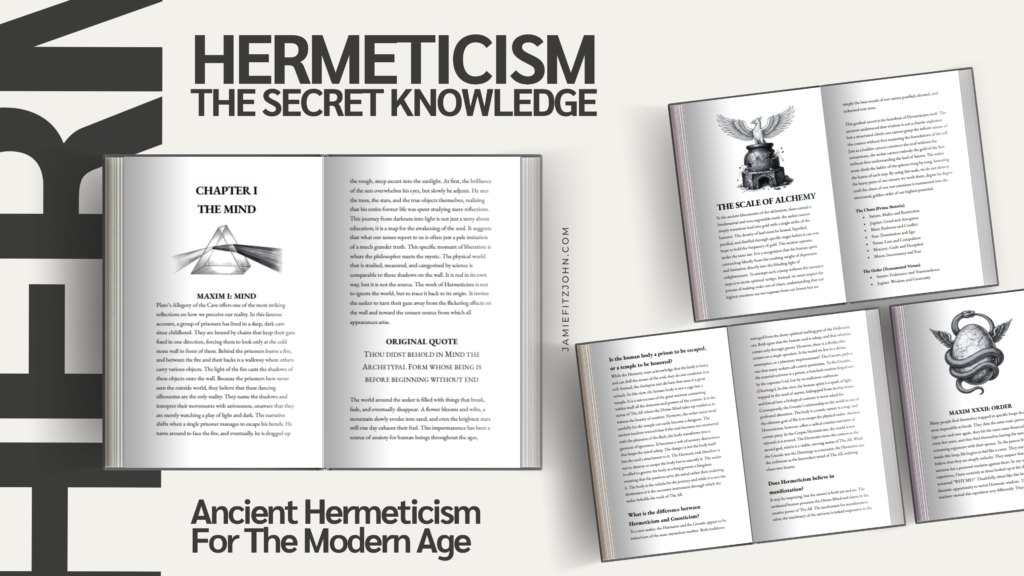
1. Hermeticism The Secret Knowledge
When you begin to study the ancient hermeticism source material you will quickly discover that the authors did not provide an introductory course for beginners. They wrote for initiates who already understood the basic mechanics of the universe. This is why a comprehensive modern guide is the most important tool you can have in your library.
While it might seem like favoritism to suggest a contemporary work at the head of a list of ancient scriptures we do so because it is the only way to bridge the gap between our modern world and the world of the ancient Hermeticists. This book acts as the indispensable key that unlocks the meaning of the source texts.
Hermeticism The Secret Knowledge is essential because it decodes the dense symbolism and the archaic terminology found in the hermeticism source material. It takes the abstract concepts like the Divine Mind and the Logos and explains them in clear and accessible language. It provides the historical and philosophical context that you need to appreciate the depth of the dialogues. Without this foundation the ancient texts will often seem like a confusing collection of myths and contradictions.
Furthermore this book is unique because it focuses on the practical application of the source material. The ancients did not study philosophy for its own sake but as a means to achieve spiritual regeneration. This book includes specific exercises and meditations that are derived directly from the primary sources. It teaches you how to perform the work of the soul using the same methods that the ancient masters used. By starting here you ensure that when you finally pick up the ancient dialogues you have the clarity and the focus necessary to receive their true wisdom.
2. The Corpus Hermeticum
Translated by Brian P. Copenhaver
The most famous and significant part of the hermeticism source material is the collection of seventeen Greek treatises known as the Corpus Hermeticum. These texts were rediscovered in the Renaissance and their translation by Marsilio Ficino sparked a spiritual and intellectual revolution that defined the modern world.
This translation by Brian Copenhaver is the standard for anyone who wants to study the authentic hermeticism source material. It provides a precise and literal translation that stays as close to the original Greek as possible. This is crucial because even small changes in translation can significantly alter the meaning of the profound metaphysical concepts described in the dialogues.
The texts themselves are structured as dialogues between Hermes Trismegistus and his students. They cover a vast range of topics including the creation of the world and the nature of the soul and the journey of the human intellect. The first treatise Poimandres is perhaps the most important work in the entire canon as it describes a mystical vision of the cosmos and the divine origins of humanity. Reading the Corpus Hermeticum is a spiritual journey that challenges the reader to look beyond the material world and to recognize their own divine nature.
3. The Latin Asclepius
Translated by Clement Salaman
While the Corpus Hermeticum was written in Greek the Asclepius is a long dialogue that has been preserved in Latin. It is one of the most complete and comprehensive pieces of hermeticism source material providing a detailed look at the religious and ritualistic side of the tradition.
The Asclepius is set within the sanctuary of an Egyptian temple and it features Hermes instructing his disciple Asclepius on the nature of God and the cosmos. It is famous for its controversial passages on the art of animating statues and its haunting prophecy about the future fall of Egypt.
It is an essential piece of hermeticism source material because it emphasizes the role of humanity as the caretaker of the world. It teaches that human beings are a middle point between the gods and the material world and that our purpose is to maintain the divine order through our words and actions. This text provides a much more ritualistic and devotional perspective than the philosophical treatises of the Corpus.
4. The Emerald Tablet
Of all the hermeticism source material none is more legendary or more influential than the Emerald Tablet. Although it is a very short text it is the foundational document of the alchemical tradition.
The tablet contains the famous axiom As above so below which is the central principle of the entire Hermetic worldview. It describes a mysterious process of creation and transformation that involves the interaction of the Sun and the Moon and the Earth and the Wind.
It is a text that is meant to be contemplated rather than just read. Its few lines contain the entire operational formula for the Great Work of spiritual alchemy. It is a masterpiece of symbolic density and it remains the primary authority for anyone who wants to understand the practical side of the tradition.
5. The Stobaeus Fragments
Edited by G.R.S. Mead
Much of the original hermeticism source material has been lost over the centuries. However we are lucky that a 5th century scholar named Joannes Stobaeus included many excerpts from Hermetic writings in his anthology of Greek literature.
These fragments are essential for anyone who wants a complete picture of the tradition. They include the famous Kore Kosmou or Virgin of the World which is a dialogue featuring the goddess Isis as the teacher. This text provides a unique mythological perspective that is not found in the other major works.
The Stobaeus fragments often focus on the nature of the soul and its journey through the planetary spheres. They provide a wider context for the teachings of the Corpus Hermeticum and show that the tradition was even more diverse and sophisticated than the surviving books suggest.
6. The Greek Magical Papyri
Edited by Hans Dieter Betz
For a long time scholars only studied the high philosophy of the Hermetic dialogues. However the discovery of the Greek Magical Papyri in Egypt provided a whole new dimension to the hermeticism source material. These are the actual handbooks of the magicians who lived in the same world as the Hermeticists.
These texts are filled with spells and rituals and invocations that call upon Hermes and Thoth and other divine powers. They show the practical application of the Hermetic worldview in everyday life. They are a gritty and realistic piece of hermeticism source material that shows how people used their spiritual knowledge to heal the sick and protect themselves and achieve their desires.
The Papyri are essential for understanding the ritual context of the tradition. They prove that Hermeticism was not just an abstract philosophy for scholars but a living practice that involved the use of sacred names and symbols and physical materials.
7. The Nag Hammadi Hermetica
Found in The Nag Hammadi Library
The discovery of the Nag Hammadi library in 1945 was one of the most important events in the history of religious studies. While most of the texts were Gnostic the library also contained several pieces of hermeticism source material.
The most important of these is The Discourse on the Eighth and Ninth which is a dialogue that describes an actual ritual of initiation. It provides rare evidence that the Hermetic texts were used as part of a ritual process of spiritual ascent.
The Nag Hammadi finds also included a fragment of the Asclepius and a prayer of thanksgiving. These texts confirm that the quest for Gnosis was a shared concern for many different spiritual groups in ancient Egypt and they help us to see the connections between the Hermetic and Gnostic paths.
8. The Definitions of Hermes Trismegistus to Asclepius
This collection of aphorisms is often found at the end of modern translations of the Hermetica. It is a series of short and punchy definitions of key spiritual terms.
It is an excellent piece of hermeticism source material for those who want a clear and concise summary of the philosophy. It covers topics like the nature of God and the structure of the cosmos and the relationship between the mind and the body.
The definitions are likely very old and were probably used by students as a way to memorize the core principles of the tradition. They provide a direct and authoritative look at the Hermetic worldview without the long philosophical arguments found in the dialogues.
9. The Discourses of Philo of Alexandria
Philo was a Jewish philosopher who lived in Alexandria during the same period when the Hermetic texts were being written. While he was not a Hermeticist his work is an essential piece of hermeticism source material because it represents the intellectual atmosphere of the era.
Philo used the same Greek philosophical terms as the Hermetic writers to explain the mysteries of the Jewish scriptures. He explored the concept of the Logos and the nature of the Divine Mind in a way that is strikingly similar to the Hermetica.
Reading Philo helps the student understand the shared intellectual language of the time. It shows how the best of Greek logic was being used to explain the ancient religious traditions of the East. He provides a vital context for understanding the philosophical depth of the Hermetic tradition.
10. The Chaldean Oracles
Translated by Ruth Majercik
The Chaldean Oracles are a collection of fragments from a 2nd century poem that was revered by the later Neoplatonists. While they are not strictly Hermetic they are a critical piece of hermeticism source material because they share the same spiritual goal of the ascent of the soul.
The Oracles describe a universe that is ruled by a divine trinity of the Father and the Intellect and the Soul. They provide a detailed map of the spiritual realms and the different orders of angels and demons.
They are important because they provided the theological justification for the practice of theurgy or divine magic. They show that the quest for direct contact with the gods was a central concern for the entire spiritual elite of the late ancient world.
Returning to the Root
The study of the authentic hermeticism source material is a transformative experience that requires patience and dedication. It is a process of learning to think and feel like an ancient initiate. Start with Hermeticism The Secret Knowledge to get the clear and practical foundation you need. Let it be the light that guides you through the ancient vault.
Then explore the dialogues of the Corpus Hermeticum and the rituals of the Magical Papyri. Listen to the voices of the masters as they speak across the centuries. The source is there waiting for you. The books are the key. Would you like me to help you create a specific reading plan for going through these primary source texts in chronological order?