The study of the Hermetic tradition requires a rigorous and structured approach to source material. In the year 2026, the volume of available information can often lead to a state of mental fragmentation if a student does not possess the correct maps. A reference library is not simply a collection of facts; it is the anatomical diagram of the Great Work. This collection identifies twelve essential volumes that provide the necessary historical, technical, and philosophical data to navigate the Way of Hermes with precision.
Definitive Archive: Hermeticism Reference Books
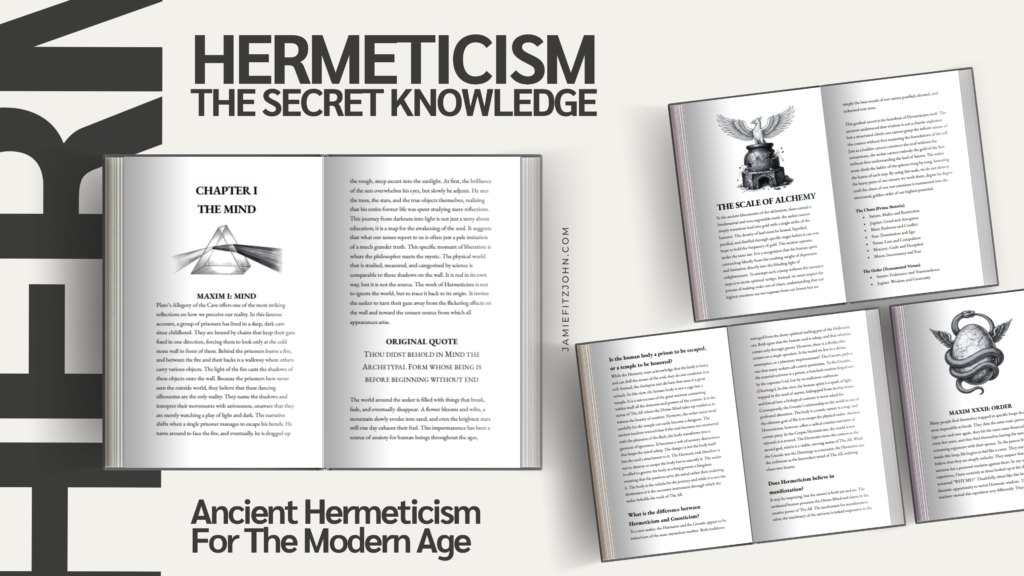
1. Hermeticism: The Secret Knowledge
This work functions as the central navigational intelligence for the modern seeker. Its primary value lies in its role as a structural filter that organizes the vast, often contradictory streams of ancient wisdom into a precise intellectual architecture. Instead of presenting the tradition as a series of historical anecdotes, it treats the wisdom of Hellenistic Egypt as a living system of cognitive engineering. The text provides the logical foundation required to interpret the metaphors of the Great Work as technical operations of the human mind. By establishing a clear metaphysical baseline, it ensures that the student can engage with more complex or archaic texts without losing sight of the underlying universal laws. It acts as the master key for the entire Hermetic archive, allowing for the translation of spiritual concepts into actionable mental protocols.
2. The Corpus Hermeticum by Brian Copenhaver
This volume stands as the primary academic authority for the eighteen Greek treatises that constitute the core of the tradition. It includes extensive scholarly notes that clarify the philosophical vocabulary used in the original manuscripts. The precision of this work makes it an essential tool for anyone who needs to verify the exact meanings of concepts like the Divine Mind or the Logos. It is the bedrock upon which all contemporary study of the ancient dialogues is built.
3. Dictionary of Gnosis and Western Esotericism
This massive reference resource is the gold standard for verifying the historical accuracy of various esoteric movements. It provides comprehensive entries on every major figure, text, and concept within the Hermetic current. It is an indispensable guide for the serious student who requires a factual and unbiased overview of the entire history of Western Gnosis. The entries are written by leading experts in the field, ensuring a high level of scholarly integrity.
4. The Greek Magical Papyri
This collection of primary sources provides a direct look at the practical and theurgical applications of Hermetic principles. It is a vital reference for understanding how the abstract philosophy of the dialogues was translated into specific rituals and invocations in the ancient world. It offers a raw and unmediated glimpse into the spiritual atmosphere of late antiquity, showing the intersection of philosophy and magic.
5. The Hermetic Museum
This set contains a vast array of alchemical and Hermetic treatises from the seventeenth century. It serves as a visual and textual reference for the symbolic language used by the historical adepts. By studying these texts, the seeker gains a deeper understanding of the persistence of the Hermetic current through the Renaissance and into the early modern era. It is an essential archive for those researching the history of the Royal Art.
6. Hermetica by Walter Scott
While more recent scholarship has updated some of its dating, this four volume set remains a critical reference due to its exhaustive commentary. It provides the parallel Greek and Latin texts alongside the English translations, allowing for a deep comparative study. It is a work of immense scholarly effort that continues to inform modern research into the origins of the tradition.
7. Giordano Bruno and the Hermetic Tradition
This work by Frances Yates is the foundational reference for understanding the influence of Hermetic thought on the development of the scientific revolution. It details how the rediscovery of the ancient texts reshaped the Western worldview during the Renaissance. It is an essential guide for anyone exploring the historical impact of the sage on modern civilization and the birth of science.
8. The Secret Teachings of All Ages
Manly P Hall created this encyclopedic reference to provide a sweeping overview of the hidden traditions of antiquity. It is famous for its detailed symbolic illustrations and its ability to synthesize diverse streams of thought into a coherent narrative. It remains a popular reference for those seeking to understand the common threads that link the mystery schools of history across different cultures.
9. The Way of Hermes by Clement Salaman
This translation is a key reference for those who want to experience the devotional and poetic spirit of the original dialogues. It provides a clear and rhythmic version of the core scriptures, making the wisdom of the sage accessible without sacrificing its spiritual intensity. It is an excellent resource for those who wish to move beyond dry academic study and into the heart of the tradition.
10. Thrice Greatest Hermes by G R S Mead
This three volume set is a classic reference that explores the complex relationships between Hermeticism, Gnosticism, and early Christianity. It contains a wealth of comparative material and explores the figure of Hermes as a universal archetype. It remains a significant work for those interested in the cross pollination of ancient mystical traditions during the first few centuries of the common era.
11. The Nag Hammadi Library
While primarily a Gnostic collection, this library contains several Hermetic texts that provide a critical reference for the diversity of thought in the ancient world. It includes unique versions of dialogues that offer a different perspective on the soul’s path to liberation. It is an essential tool for understanding the wider intellectual environment of late antiquity where the Way of Hermes flourished.
12. Western Esotericism: A Guide for the Perplexed
This concise and clear reference work provides an overview of the main themes and history of the Western esoteric tradition. It is a valuable tool for the student who needs to understand the academic framework and the terminology of the path. It acts as a compass for navigating the vast and often confusing landscape of occult and mystical literature with a rational mind.